
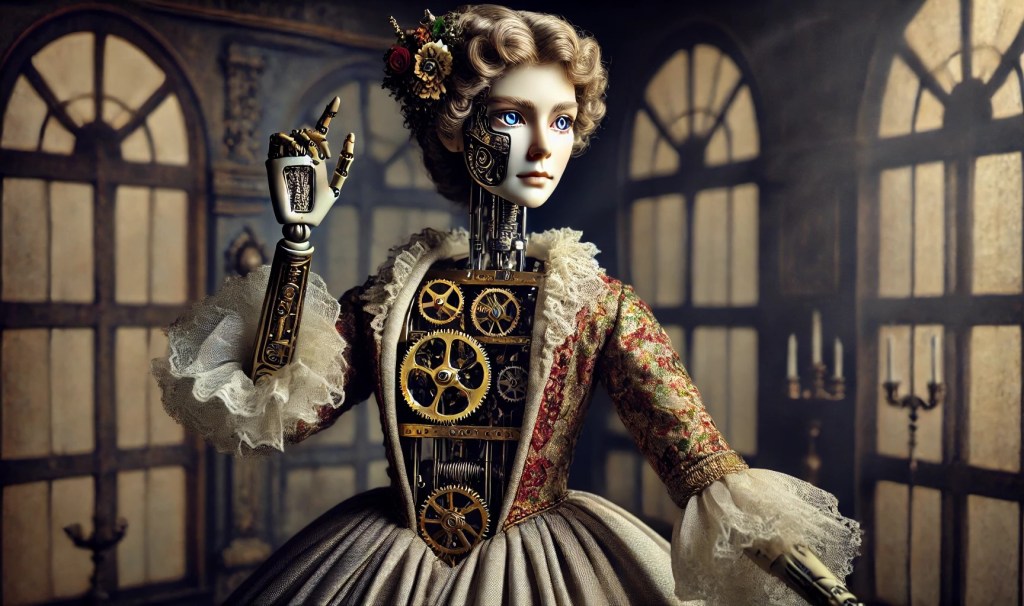
Jacques Offenbach gained his celebrity with his operettas, but become immortal thanks to his unique serious opera, Les contes d’Hoffmann (The Tales of Hoffmann).
The king of operetta becomes serious
The operetta genre become common in Paris around 1850. It is a light version of opera, full of songs and dances, with easy subjects and accessible for a popular audience. Jacques Offenbach (1819-1880) is considered the father of French operetta, having written nearly 100 of them.
In the last year of his life, Offenbach wanted to be to be taken seriously as a composer with great artistic depth. The gothic and fantastical tales of German writer E.T.A. Hoffmann gave him a chance to approach deeper and more dramatic themes like tragic love and obsession.
The result was his second and last serious opera, Les contes d’Hoffmann (The Tales of Hoffmann, 1881).
Les contes d’Hoffmann, an opera in five parts
In the prologue Hoffmann seats at a tavern, drinking and telling stories to his friends, when the main villain, Lindorf, appears.
Each act then takes us into one of Hoffmann’s past loves: Olympia in Act 1, who turns out to be a mechanical doll. Antonia in Act 2, a singer with a mysterious illness that forbids her to sing. Giulietta in Act 3, a courtesan who betrays him. Each of these stories has its own distinct feel: fantasy, tragedy, and romance. But they’re all connected by Hoffmann’s bad luck in love and the presence of a villain (usually a version of Lindorf) messing things up.
Finally, in the epilogue, we’re back in the tavern, where Hoffmann realizes the meaning of all his tales and his heartbreak. The epilogue brings everything full circle, wrapping up Hoffmann’s journey with a touch of bittersweet resignation.
The barcarolle
The barcarolle “Belle nuit, ô nuit d’amour” is a beautiful, gentle duet that celebrates the romance of the night. Sung by the characters Giulietta and Nicklausse, it has a smooth, swaying 6/8 rhythm that feels like a boat gliding through calm water. The melody is warm and peaceful, blending the voices in a soft, dreamy harmony that makes listeners feel wrapped up in the magic of evening.

Incomplete masterwork
Offenbach never got to see the premiere of The Tales of Hoffmann because he died before it was finished.
Offenbach passed away just a few months before the opera was set to debut. When he died the music was mostly there, but some parts still needed more work. Ernest Guiraud finished orchestrating certain scenes and tying up some loose ends so it could be performed.
As it is recognized as Offenbach’s masterpiece, The Tales of Hoffmann remains part of the standard opera repertory.

 Classical Wonders