
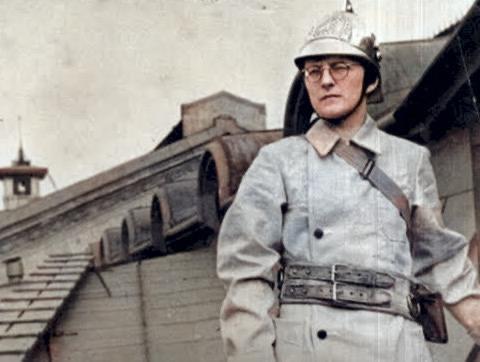
The Leningrad premiere of Shostakovich’s Symphony No. 7 was an act of courage and resistance against the brutal Nazi 1941-1944 siege of Leningrad. To make this performance happen, a massive effort was put in place from musicians, officials, and citizens, for battling the life-threatening conditions caused by the blockade.
Context: The Siege of Leningrad
The Nazi siege on Leningrad began in September 1941 (and ended on January 1944), aimed to starve the city into submission, cutting off food, fuel, and essential supplies. The extreme cold, shelling, and malnutrition took 1.5 million people’s lives. It has been one of the longest and most destructive sieges in history.
Dmitri Shostakovich (1906-1975) was in the city during the siege, and began to work on his Symphony No. 7, a piece that would represent Soviet resilience and defiance against Nazi forces.
The performance planning
Soviet leadership saw the symphony’s potential to lift the morale of those suffering under siege, so they decided to arrange a performance in Leningrad. Despite the dire circumstances, the effort to premiere this work became a powerful symbol of survival and unity, and it inspired hope across the Soviet Union.
Organizing the Orchestra and Conductor Karl Eliasberg
Most of the city’s musicians had died from starvation, fled, or joined the military. Conductor Karl Eliasberg, who led the performance, faced the challenge of assembling a full orchestra under impossible conditions. He found only 15 surviving musicians from the Radio Orchestra, far from enough for the symphony’s demands of about 100 players. To gather more players, Eliasberg and his team recruited individuals from the military, from civil service, and even from retired musicians.
Many of them were weak from malnutrition and could hardly hold their instruments, let alone play for extended periods. Musicians arrived for rehearsals bundled in layers of clothing to endure the freezing temperatures of the unheated location. Several times happened that musicians fainted from exhaustion or hunger during the rehearsal.
Eliasberg, a strict but compassionate conductor, with the help of authorities, organized extra food rations for the musicians. Even though these rations were modest, they made a difference, allowing the players to continue rehearsing in their weakened states.
The Premiere and Its Symbolism
On 9 August 1942, the day Hitler planned to celebrate the city’s fall, the Leningrad premiere took place at the Philharmonic Hall, after weeks of exhausting preparation. The performance was transmitted over loudspeakers throughout the city. Soviet forces strategically aimed the broadcast toward German positions outside the city, a psychological tactic to show that Leningrad would not surrender.
The Soviet commander of the Leningrad front ordered a bombardment of German artillery positions, with an operation prepared weeks before. The purpose of the operation was to prevent them from targeting the concert hall and to ensure that it would be quiet enough to hear the music over loudspeakers.
The night of the premiere
There was a large audience for the concert: party leaders, military personnel, and civilians. The musicians onstage were dressed in multiple layers to prevent starvation-induced shivering. The electric lights above the stage were turned on only shortly before the concert started. The performance was of poor artistic quality, but was notable for the emotions raised in the audience and for its finale: when some musicians “faltered” due to exhaustion, the audience stood up “in a remarkable, spontaneous gesture … willing them to keep going”.
Legacy of the Leningrad Premiere
Citizens, soldiers, and musicians alike were moved by the power and emotion of the music. For those in attendance, the symphony offered a momentary escape, a reminder of cultural resilience, and a profound sense of unity.
The performance became legendary as a triumph of human will over unimaginable adversity. It was more than a musical performance; it was a declaration of Leningrad’s unbroken spirit, encapsulating the spirit of those enduring one of the harshest sieges in history.





 Classical Wonders