
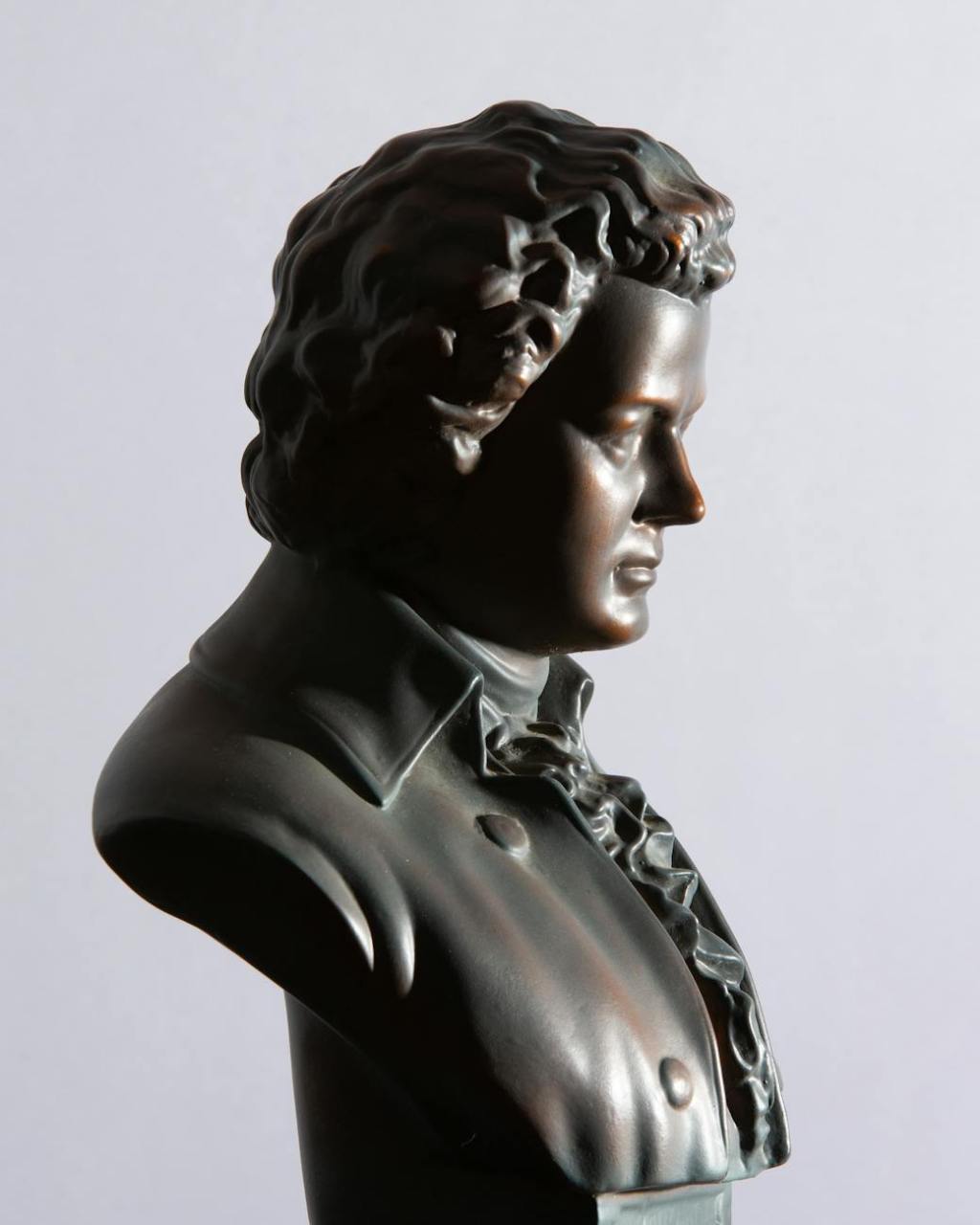
It happened for the premiere of his 9th symphony! The masterpiece that marked the history of music, with its innovations in form and orchestration.
The premiere
Ludwig van Beethoven (1770-1827) planned to have his last symphony premiered in Berlin, and not in Vienna as his major works had been. He believed Vienna musical tastes wasn’t ready for this kind of music, but rather were closer to Italian composers (Rossini first of all). Ludwig was very stubborn, so financiers, performers and friends had to sign a petition to make the premiere be played in Vienna, so that traditions could be maintained.
Beethoven (not) conducting
The soiree took place on 7th may 1824, and Beethoven was on the stage (the first time in 12 years!). He stood beside the official conductor, theatre’s Kapellmeister Michael Umlauf, who instructed the singers and musicians to ignore the almost completely deaf Beethoven. In fact, two years earlier he had watched as the composer’s attempt to conduct a dress-rehearsal of the opera Fidelio ended in a disaster.
Beethoven kept conducting, waving hand, stretching arms and giving the tempos. But performers followed the real conductor‘s baton only. Needless to say, the performance was a success and was honored with countless rounds of applause.
Beethoven’s 9th symphony
The last symphony composed by Beethoven is filled of composers’ technical ability, typical of his late (and more mature) artistic period.
This piece marks the peak (and the end…) of the classical symphony. Here are some of its main characteristics.
The orchestration
The bigger innovation is the use of vocal parts (four soloist and a chorus) in a symphony. This example will be followed by many composers, like Mahler and Liszt.
Soloists and chorus are used in the last movement. The fourth movement is in the form of theme and variations. It is based on the famous “Ode to Joy”, a musical representation of universal brotherhood.
In the 9th Beethoven used by far the largest orchestra than any other symphony. He made an extended use of three trombones. He also added the piccolo, bass clarinet and contrabassoon, and percussions like Bass drum, cymbals, and triangle. These instruments, typical of larger orchestras and rarely used by Beethoven in his symphonies, appear in the fourth movement, adding complexity and sonic impact to the score.
The duration
The other Beethoven symphonies lasted about 30 minutes, with the exception of the 3rd “Heroic” that lasted more than 45 mins. The 9th has the longest duration: a typical performance lasts about 70 minutes. This marks a difference with previous symphonies (from others composers too), and lays the foundations for the model that many composers of the second half of the 19th century will follow.
Open fifth
The symphony opens with a very uncommon use of open fifth, in an arpeggio containing only a perfect fifth (with no third) for a duration of sixteen bars. This gives the opening a sense of indeterminacy, of expectation, that resembles the the sound of an orchestra tuning up. The waiting is satisfied only at bar number 17, where the theme in D minor is presented.
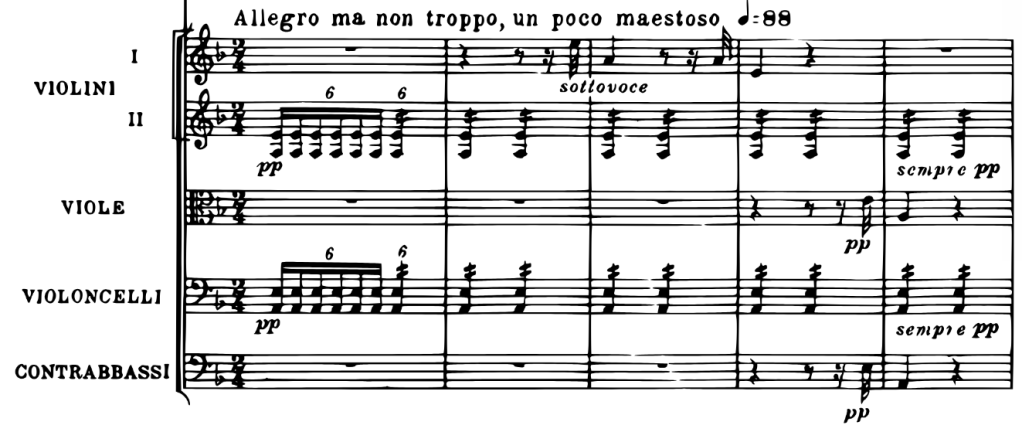
The same opening can be found in the second movement. The introduction to the scherzo is made with a descending sequence of open fifth, quoting the beginning of the first movement.
The fourth movement (the Finale) leaves the D minor tonality, grave and melancholy, to a shocking D major, far more appropriate for the triumphant atmosphere of the Ode to Joy.


 Classical Wonders