
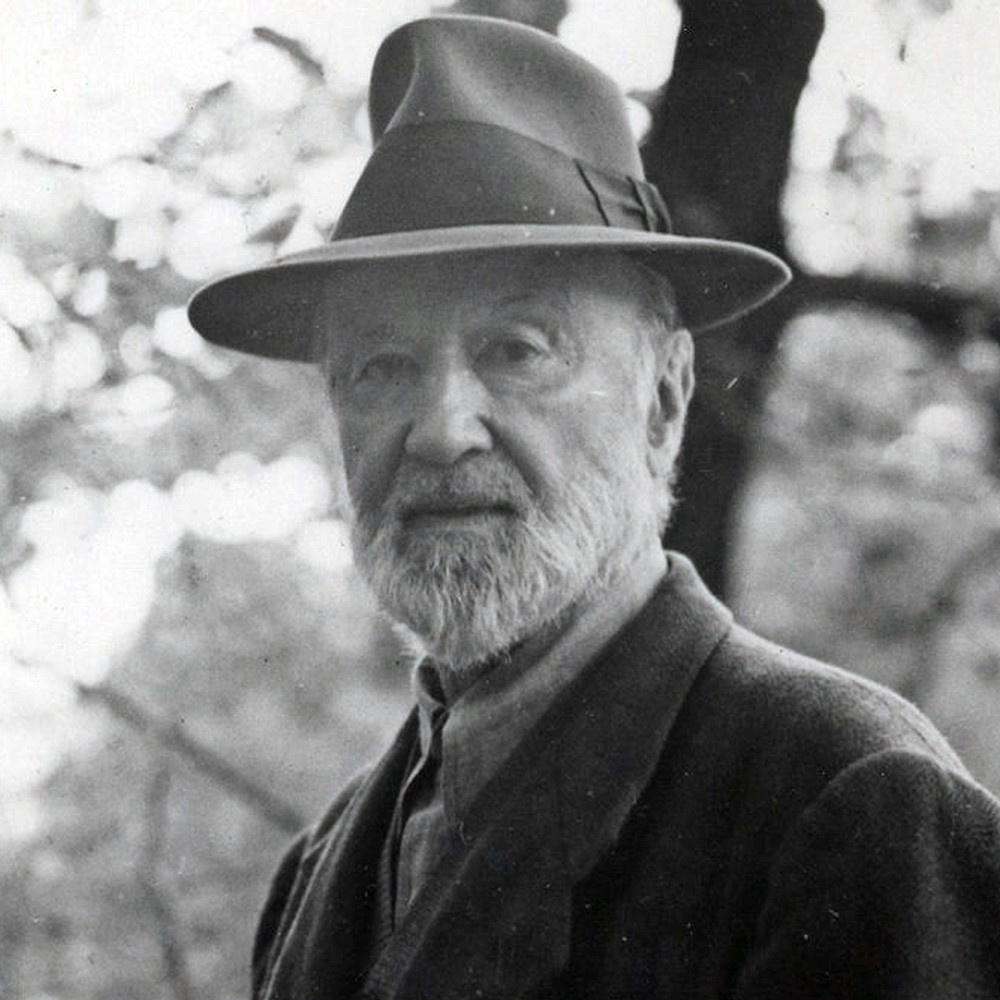
Charles Ives (1874 -1954) was a very uncommon composer. Perhaps because his first occupation wasn’t related to music. Yet, he created beautiful and futuristic music. How he did it? That’s an Unanswered Question!
Why Ives was special
Charles Ives was among the earliest American composers to become famous on a global scale. But he wasn’t a composer, at least not for a living. He had a career in insurance industry, he even founded his insurance company and wrote his own book on the subject. This was his first life.
His second life was for music.
Creativity
Every spare time was for composition, without the need to succeed, be famous and earn lots of money. He used the chance to push creativity to the limit.
Igor Stravinsky summarized wery well Ives’ music. In 1966 he said: “[Ives] was exploring the 1960s during the heyday of Strauss and Debussy. Polytonality; atonality; tone clusters; perspectivistic effects; chance; statistical composition; permutation; add-a-part, practical-joke, and improvisatory music: these were Ives’s discoveries a half-century ago as he quietly set about devouring the contemporary cake before the rest of us even found a seat at the same table”.
Easy listening (almost…)
Despite of its technical complexity of his music, listening to his music is enjoyable, since main characteristic are well recognizable: you can always follow a melody, understand a crescendo, or perceive two or more instruments that are playing together.
Charles Ives compositions are mainly instrumental. They go from music for band, continue with string quartets, small chamber music, and go to higher level with music for big orchestra.
We stand for God
His most notable pieces are the Four Symphonies. Particularly the Fourth Symphony (1909-16), where the complex orchestration and use of polyrhythm require two conductors being on sthe stage at the same time.
The last movement is a slow-time largo. The background is a complex texture of instrument, kept at a pianissimo, that evolves very slowly. At some point, a melody stands out, sung by a wordless chorus. The melody is the religious hymn “We stand for God“. This is genius!
Unanswered Question
A beautiful example of Ives’ sense of experimentation is The Unanswered Question of 1908, written for a very unusual orchestra (one trumpet, four flutes and string quartet). The strings play very slowly as a background throughout the piece. Several times the trumpet plays a short riff that Ives described as “the eternal question of existence.” Each time the flutes respond, always in a different and increasingly dissonant, cutting way. In the end, the unanswered question remains… unanswered!


 Classical Wonders