
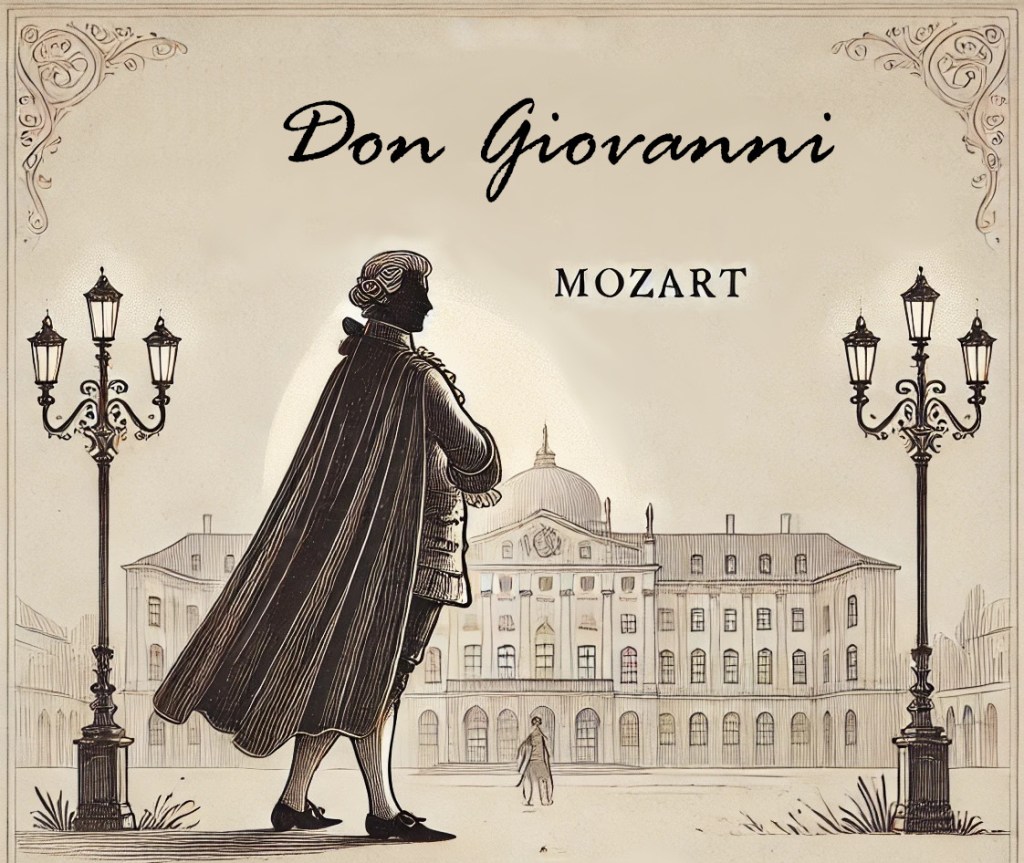
Wolfgang Amadeus Mozart (1756-1791) was a master in procrastination. He used to finish compositions in a rush as deadlines approached. He reached the highest level with his opera Don Giovanni. He wrote the entire ouverture the night before the premiere, just after the dress rehearsal had finished.
The genius of Mozart, and the patient dedication of his wife Constanze, made the ouverture (and the opera) become one of the best known work ever.
The night before the premiere
The opera Don Giovanni was set to premiere in Prague in 1788. The night before the premiere, after the dress rehearsal was done, the opera ouverture had not yet been written!
Mozart told his wife that he would write the overture during the night, if only she kept him company and made him some punch to keep him awake.
His wife was the key
Constanze agreed and entertained him with stories about Aladdin, Cinderella, and others, which made him laugh until he cried. However, all that punch made him sleepy, and whenever she stopped telling stories, he would start dozing off. He only managed to work while she was talking. Eventually, the mix of excitement and exhaustion got the better of him, and his wife convinced him to rest on the sofa, promising to wake him in an hour. But he slept so deeply that she let him sleep for two hours instead. Mozart finally woke up at five o’clock.
The deadline approaches
By seven in the morning, the overture was finished and handed over to the copyist. The ink was hardly dry on some of the pages when they were given to the orchestra.
A rehearsal was not possible.
The evening of the premiere, the orchestra gave its best, and played the ouverture with a spirit that roused enthusiasm of the audience, and at the same time delighted the composer. Mozart, turning to the orchestra, exclaimed “Bravo! Bravo! Gentlemen, that was admirable!”.
The Don Giovanni ouverture
The overture is in binary form and includes two themes that provide a symphonic summary of the opera.
The first section is a gradually building Andante, introduced by solemn chords from the strings. It is written in D minor, which in Mozart’s works often means something serious or sad is happening, and in fact it recalls the final scene with the Commander and symbolize the avenging fate.
The second theme, a lively Molto Allegro written in an energetic D major, serves as an instrumental portrayal of the “young, extremely licentious knight.”

 Classical Wonders