Wozzeck is an Expressionist opera composed by Alban Berg (1885-1935) between 1914 and 1922. The opera breaks away from traditional opera: its futuristic musical language merges with classical formal structure, achieving dramatic effects never seen before.
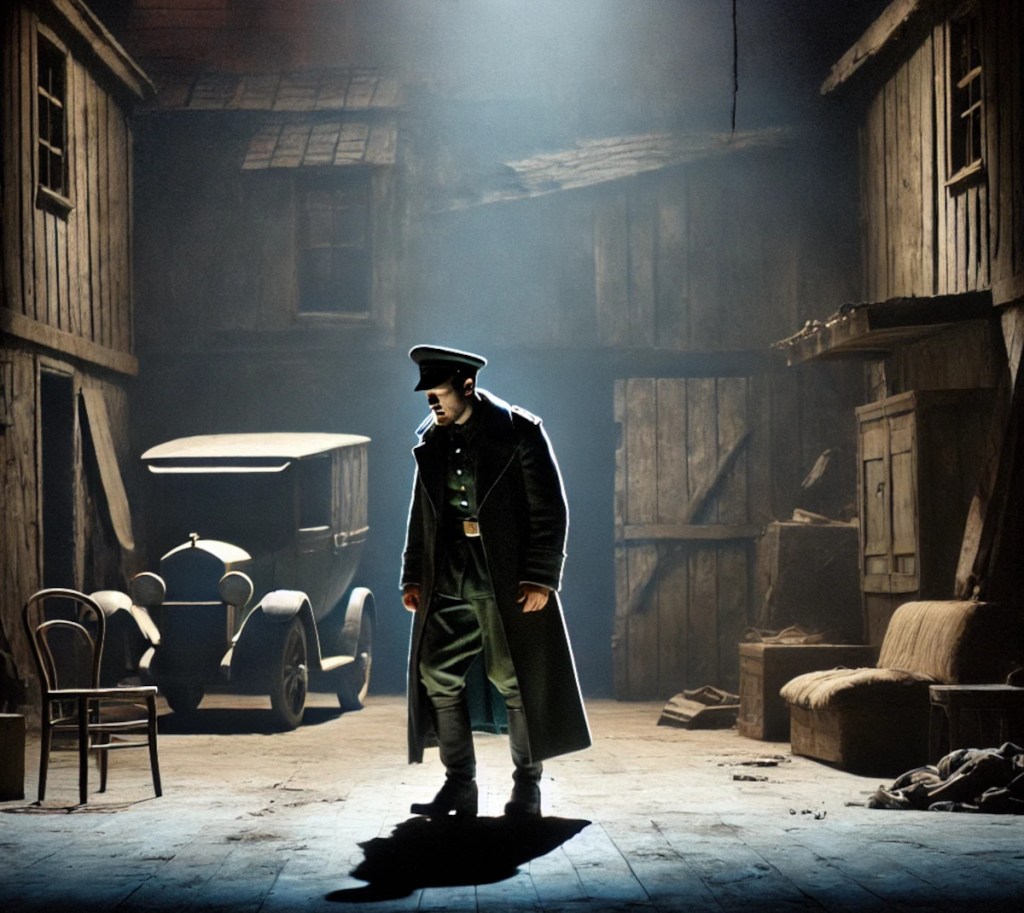
Wozzeck is based on Georg Büchner’s unfinished drama “Woyzeck”. It reflects the despair of the working class and the trauma of war. The despair of war that had a deep connection with Berg’s own experiences from World War I.
Structural form
The opera is divided into three acts, each consisting of five scenes. Rather than relying on the typical linear storytelling found in earlier operas, Berg uses different musical forms (borrowed from instrumental music) for each scene, reflecting emotional depth of the characters and contributing to the overall complexity of the work.
First Act: character exposition, in classical forms
In the first act, Berg introduces the characters and their troubled lives, using forms like suite, passacaglia, and variations.
The first scene uses a suite, a series of short dance movements, which reflects the rigid, often mechanical existence of Wozzeck’s daily life.
The passacaglia, a baroque form built on a repeated bass line, is used in the fourth scene to reflect the inevitability and hopelessness of Wozzeck’s fate.
Second Act: development, through symphonic form
The second act follows a symphonic structure, where each scene compose a symphonic movement. Techniques like sonata form and rondo develop the dramatic action, with raising tensions and conflicts. Like the thematic development in a symphony, this symphonic approach gives the act a sense of coherence and progression, even as the story plunges into darker emotional territory full of tensions and conflicts.
Third Act: fragmentation and emotional collapse
The third act features six inventions, each focused on musical elements such as rhythm and tonality. This act symbolizes Wozzeck’s mental disintegration, culminating in the haunting final scene, in which Wozzeck drowns and his child is left alone.
Atonality and Expressionist Influence
“Wozzeck” harmonic language is atonal, meaning that it avoids a traditional tonal center. Berg combines serial techniques (assimilated from his teacher Arnold Schoenberg) and Sprechstimme (a technique between singing and speaking), with more traditional, almost romantic expression. This blend makes the opera emotionally accessible, though using modern dissonance and fragmented forms.
Heritage
“Wozzeck” is a carefully constructed blend of traditional musical structures (like suites, symphonies, and inventions) used in a highly innovative way to express the inner turmoil of its characters. Berg’s approach enhance the opera’s themes of madness, fragmentation, and despair, making it a powerful and enduring piece of 20th-century music.