4th Symphony was the first work to bring Carl Nielsen (1865-1931) on international recognition. It was composed between 1914 and 1916, the threat of war made Carl think about a new music piece, where he wanted to express the idea that life, and the will to live, in all its driving force and resilience, is “inextinguishable“, hence the title.
Elementary will to live
What Nielsen meant can be summarized with the words used in a letter he wrote to a friend, in 1915, while working on his 4th symphony.
“What I have wanted to describe is all that has the will and the urge to life that cannot be kept down. Not in the sense of demeaning my art to a mere nature imitation, but of letting it try to express what lies behind. The calls of the birds, the cries of sadness and joy of animals and human beings, their hungry murmurings and shouting, fighting and mating, and whatever all the most elementary things are called.”
Music form and style
Vitality can be found in the form of the work. The traditional partition of the symphony in four movements remains, but the movement are played without breaks, to enhance the feeling of dynamism of life.
The thematic structure uses minimal intervallic fragments (particularly fifths), that serve as “elemental” and “vital” components. The same motifs are allowed to circulate throughout all four movements, generating a sort of cyclic form.
Each movement is composed as a succession of different sections, reaching a climax and then fading, and from one’s ashes a new one always emerges. In this continuous succession of buildups, dispersals, and new formations, the principle of musical “inextinguishability” gains meaning.
The battle of timpani in the 4th movement
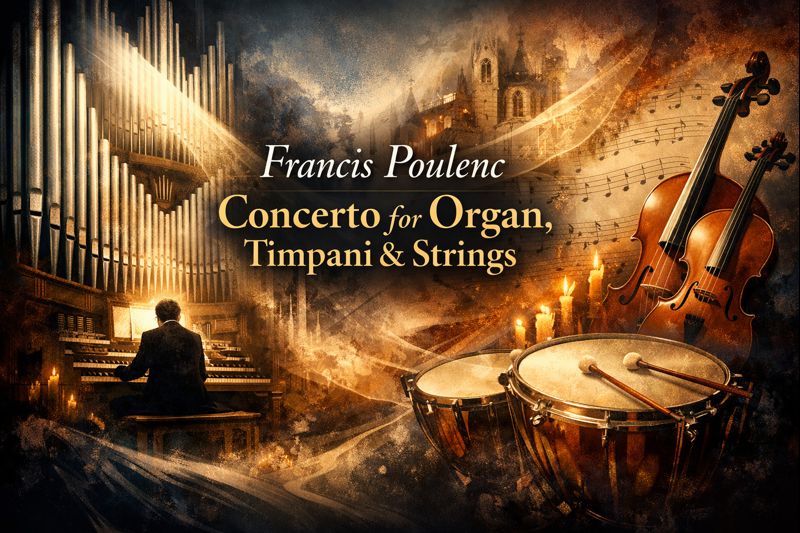
One of the most original features of the symphony is the timpani “duel” in the fourth movement.
Nielsen places two set of timpani in front, at the opposite side of the orchestra, and ask timpanist to “maintain a certain menacing tone until the end, even when playing pianissimo”. This musical “battle” creates a sense of tension and raw energy, it is described by the composer as “something to do with war.”
In the Finale the opposing timpani rhythms turn into unity, and at the same time the tonality resolve to a E major for the final glorification of the human’s will of life.