In 1894, Claude Debussy (1862-1918) presented, almost unnoticed, a work that would alter the world’s perception of music. A work that will change the sound of French music for most of the next century. With Prélude à l’après-midi d’un faune, noted Pierre Boulez, ‘the art of music began to beat with a new pulse’.
Impressionism: a new musical style
The score of the Prélude is very straightforward. The composition follows a loosely outlined tripartite form. It contains two themes, a thematic connecting element, and a variation of the first theme.
So far, nothing seems new.
The innovation is that it almost lacks rhythmic propulsion. Its structure feels organic, almost improvised, with themes appearing and dissolving seamlessly. Debussy used whole-tone scales and unresolved dissonances, giving the music an ethereal, floating quality. The composer uses unresolved dissonances to create a sense of suspension and ambiguity. Chords often lack traditional resolution, and are left floating instead of driving forward. This avoids the tension-release patterns typical in old classical harmony, and mirrors Impressionist painting that uses blurring edges to evoke atmosphere over clarity.
Its uniqueness lay in having sacrificed motion, to be replaced with extended contemplation of momentary beauties.
Before Debussy, music followed strict rules, with well-defined harmonies and stories told in a clear way. After him, everything changed: the focus shifted to colors, emotions, and freedom of expression. Other composers draw inspiration from him, and Impressionism influenced countless generations of musicians.
The Faun theme
The first theme, played by the solo flute, is the main one and represents the Faun, surrounded by the light and shadows of the orchestra, following an impressionist aesthetic. The melody has an Arabian feel, with a flowing, sinuous line that brings to mind floral decorations.

The composer later called this style of writing “undulating, lulling, rich in curved lines”. This theme recurs throughout the piece, but never exactly the same way, it’s transformed and combined with other textures and secondary themes.
And now… some anecdotes!
A canceled theatrical production
Debussy wrote his Prelude inspired by the Stéphane Mallarmé’s poem of the same name. Mallarmé and Debussy worked together to make it a theatrical production with a musical introduction, scheduled to premiere on 1891.
That never happened.
The performance was postponed two weeks before the debut, and eventually canceled. The reasons remain unclear, though it’s likely that Debussy had not yet composed most of the music. His original plan was for a triptych structure: Prélude, Interlude et Paraphrase finale, but he decided to concentrate all of his musical ideas into one movement. This work premiered three years later, as the final version of Prélude à l’après-midi d’un faune.
A Diaghilev ballet, in Greek style
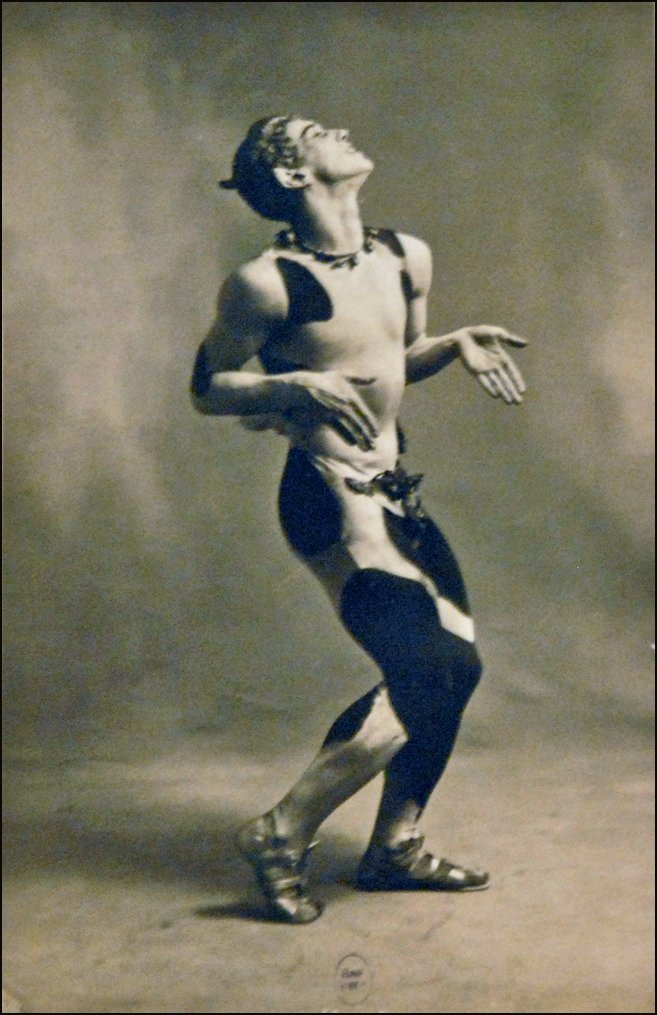
In 1912, the producer of the Ballets Russes, Sergei Diaghilev, decided to use this composition for a ballet without directly involving Debussy in the production.
The intention of the choreographer Nijinsky, in his first experience, was to experiment with a new ballet, replicating the ancient Greek style seen in the vases of the Louvre. On stage, the dancers moved with their heads and legs in profile to the audience, while only their bodies and arms faced forward.
The result was debatable, so much so that even during rehearsals Diaghilev began to doubt the success of the work.
The scandalous choreography
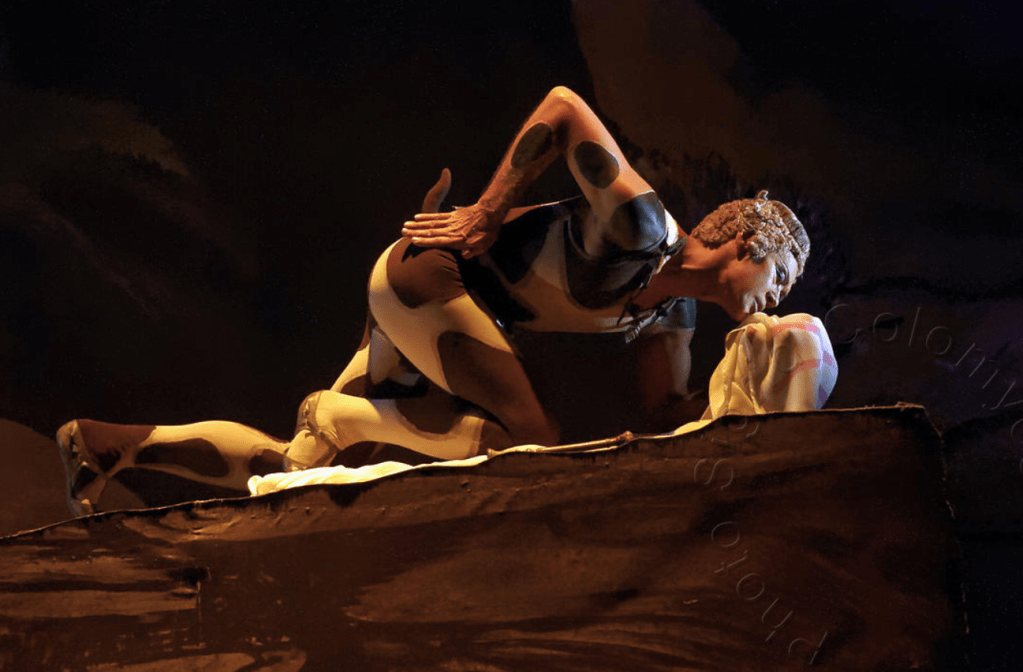
The audience was bewildered by the novelty of a dance so different from what they were used to. Nižinskij’s choice for the Faun costume, which was very tight-fitting, with the dancer’s bare arms painted in patches like the costume itself, also surprised them.
But it was especially the final mimicry of a sexual act with a scarf that caused the scandal after the first performance!